
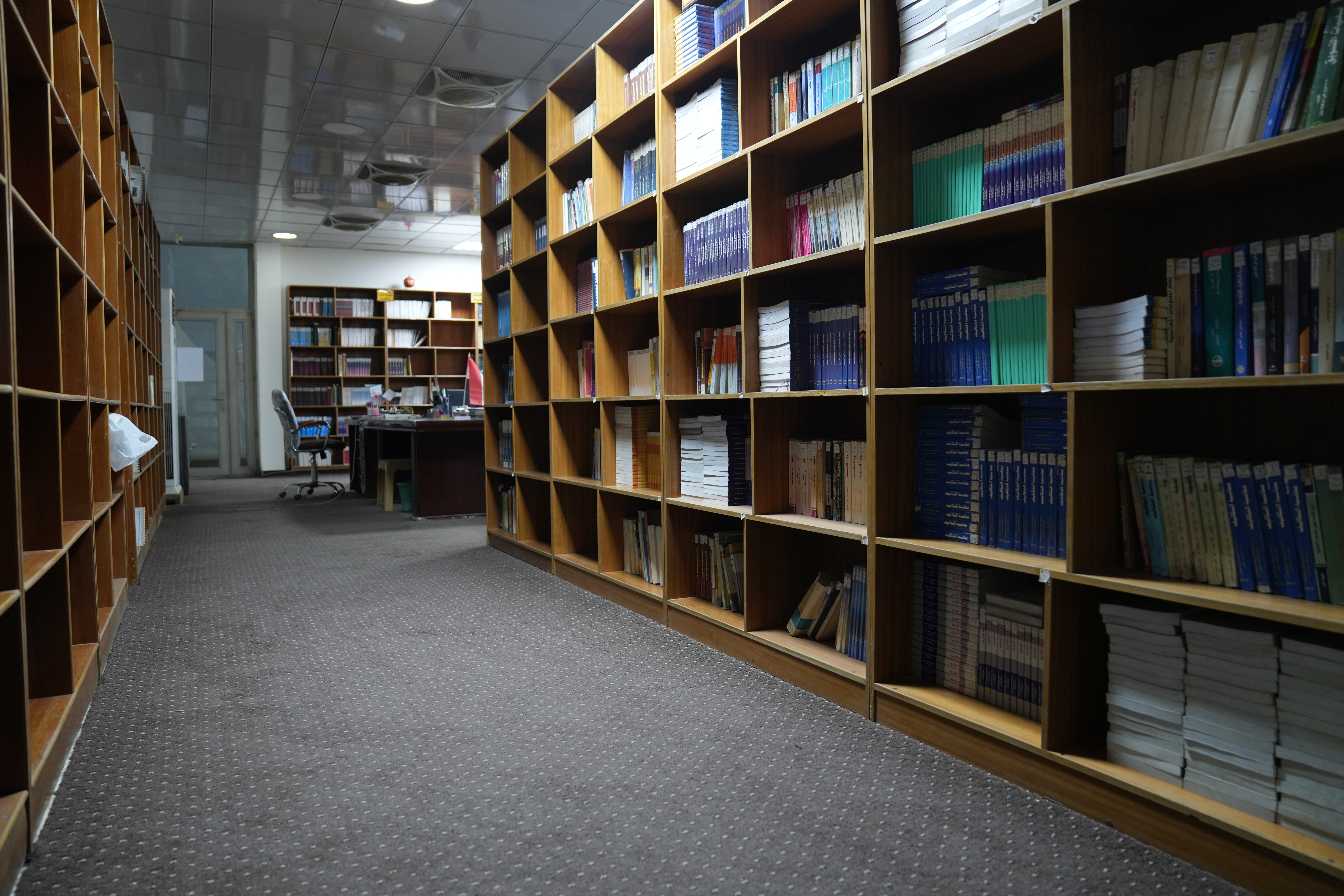
About the Library
The university library: its duties, message and vision, the library catalogue system, and the physical and environmental standards for its halls.
Duties and responsibilities
Provide printed and electronic books and scientific references in all disciplines.
Organise, classify and catalogue information sources according to the approved systems.
Provide access to databases and electronic scientific journals.
Provide lending, reading and research services to beneficiaries.
Support researchers and students in research and citation skills.
Update library collections to keep pace with scientific developments.
Provide a suitable, well-equipped study environment for reading and research.
Support the requirements of academic accreditation and university rankings.
Organise workshops and courses on the use of information sources.
Preserve knowledge sources and develop library services.
Message
Providing integrated library and information services that strengthen self-learning and scientific research, by making modern and varied knowledge sources available within a stimulating study environment.
Vision
Leadership in providing advanced knowledge sources that support education and scientific research in line with international standards.
University library catalogue
A library management system for lending and for searching books and sources in the central library and the college libraries.
Guide to physical and environmental standards in library halls
First: Introduction
Madenat Alelem University is committed to providing a safe, healthy and suitable library environment for students, teaching staff and researchers, so that the quality of educational services improves and learning and research become more effective. This guide sets out the physical and environmental standards that library halls must meet in line with safety requirements, quality assurance and Iraqi national accreditation.
Second: Objective
Provide a healthy and safe environment inside the library halls.
Improve the quality of lighting, ventilation and environmental comfort.
Reduce health and environmental risks.
Support the learning and research environment.
Meet accreditation and quality assurance requirements.
Third: Scope
Reading halls.
Electronic computer halls.
Postgraduate halls.
Stores and the archive.
Facilities belonging to the library.
Fourth: Physical and environmental standards
Requirements
- Provide suitable natural and artificial lighting.
- Distribute lighting evenly.
- Avoid reflections and visual glare.
Standards
- Reading halls: 300–500 lux.
- Computer halls: 200–300 lux.
- Use energy-saving LED lamps.
Evidence
- Lighting measurement reports.
- Maintenance logs.
Requirements
- Provide effective natural or mechanical ventilation.
- Maintain indoor air quality.
Standards
- Temperature: 22–24°C.
- Relative humidity: 40–60%.
- Renew the air periodically.
Evidence
- Ventilation inspection reports.
- Air-conditioning equipment logs.
Requirements
- Reduce noise inside the library halls.
- Provide a quiet environment for reading.
Standards
- Noise level does not exceed 40–50 dB.
- Use sound-insulating materials.
- Remove sources of disturbance.
Evidence
- Noise measurement reports.
Requirements
- Provide comfortable and safe furniture.
- Take health and ergonomic considerations into account.
Standards
- Tables and chairs suitable for long sitting.
- Adequate spacing between seats.
- Safe electrical outlets.
Evidence
- Equipment reports.
- User satisfaction surveys.
Requirements
- Apply general safety procedures.
- Equip the library with prevention measures.
Standards
- Serviceable fire extinguishers.
- Clear emergency exits.
- Guidance signage.
Evidence
- Safety records.
- Civil defence reports.
Requirements
- Maintain a clean and sustainable environment.
Standards
- Waste management.
- Rationalise energy consumption.
- Use environmentally friendly materials.
Evidence
- Environmental reports.
- Maintenance logs.
Requirements
- Provide a digital environment that supports learning.
Standards
- High-speed internet.
- Modern computer systems.
- Electronic databases.
Evidence
- Information technology reports.
- Usage statistics.
Requirements
- Ensure ease of access.
Standards
- Ramps and lifts.
- Designated places.
- Assistive devices.
Evidence
- Accessibility reports.
- User surveys.
Fifth: Implementation procedures
1. Periodic assessment
Carry out periodic checks of the physical environment.
Measure lighting, temperature and noise.
2. Periodic maintenance
Maintain air-conditioning and lighting equipment.
Follow up on electrical safety.
3. Awareness and guidance
Publish usage instructions.
Raise students’ awareness of safety procedures.
4. Continuous improvement
Analyse the feedback received.
Develop the library environment.
Sixth: Roles and responsibilities
Library administration
Follow up on the application of the standards.
Prepare the reports.
Maintenance department
Carry out maintenance work.
Safety division
Follow up on security and safety procedures.
Quality assurance division
Evaluate the level of implementation.
Seventh: Performance indicators (KPIs)
| Indicator | Target level |
|---|---|
| User satisfaction | ≥ 85% |
| Lighting efficiency | ≥ 90% |
| Noise level | Within standard |
| Safety readiness | 100% |
| Ventilation quality | ≥ 90% |
Eighth: Review and update
Annual review of the guide.
Update in line with national standards and environmental instructions.